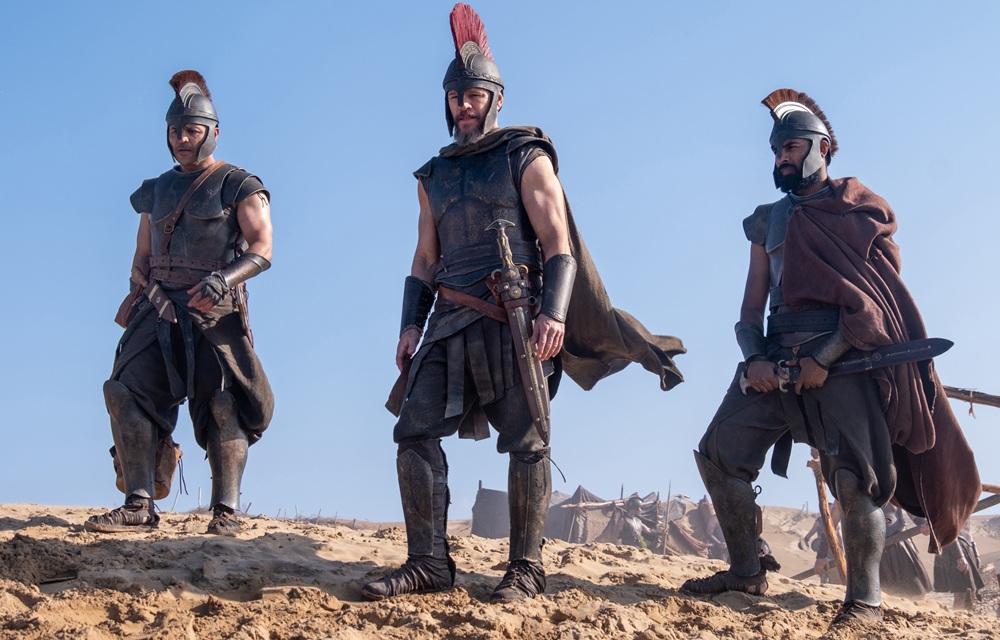

Nolan’s Odyssey is a modern trek of ancient majesty
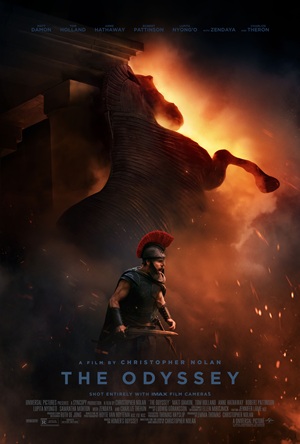
Christopher Nolan (Oppenheimer, The Dark Knight) achieves something monumental and magnificent with his robust, stridently adrenalized adaptation of Homer’s 8th-century BCE epic poem The Odyssey. A modern interpretation that still pays exhilarating homage to old school Hollywood sword-and-sandal classics like Jason and the Argonauts and Ben-Hur, the writer-director uses a mixture of gritty realism and unabashed melodramatic excess to bring his epic to life. The film’s three-hour running time vanishes in the blink of an eye, and all of it is grounded in a pugnacious, suitably rugged performance by star Matt Damon that’s the finest of his career.
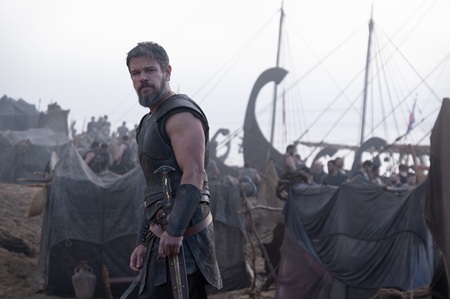
Nolan once again uses a nonlinear style. The story begins with Telemachus (Tom Holland) trying to convince his stoic mother Penelope (Anne Hathaway) to refuse the marriage requests from the slovenly men in their banquet hall filled with ill-tempered suitors. He should fill his father’s shoes as Ithica’s king. The narrative flows, suitably like a poem, this way and that from there, with the focus gently shifting to a grizzled and graying Odysseus (Damon) trying to put the pieces back together of his fragmented memory while resting in the carrying arms of Calypso (Charlize Theron).
It is here where Nolan begins to spin his inescapable web of narrative enchantment. Telemachus secretly leaves Ithaca to visit King Menelaus (Jon Bernthal). Penelope verbally parries with the suitors, most notably their serpentine Machiavellian ringleader, the duplicitous Antinous (Robert Pattinson). As for Odysseus, he must relive all of the past 20 years with a determined Calypso: from the Trojan Horse to the fall of Troy, to, ultimately, the slow, steady death of his valiant men as they all attempt to make their way across the oceans to Ithaca and home.
I’m no Homer scholar, so I’m not going to debate the historical “accuracy” of what Nolan is attempting as far as casting and dialogue are concerned (although the few choice F-words do stand out like an amusing sore thumb). What I will say is that there is no weak link anywhere amidst the massive ensemble. Standouts include Pattinson, Hathaway, Bernthal, John Leguizamo as Odysseus’s trusted servant and advisor Eumaeus, Elliot Page as the tragically heroic Sinon, Ryan Hurst as Telemachus’ friend and bodyguard Mentor, and Himesh Patel as Odysseus’s second-in-command Eurylochus. A ravishingly raw Lupita Nyong’o also makes an indelible impression in her brief scenes as a post-Trojan War Helen and her fiery, vengeance-seeking sister Clytemnestra.
But the standout performance — other than Damon’s — that makes The Odyssey come alive is delivered by two-time Academy Award nominee Samantha Morton. She appears roughly halfway through. Odysseus and his men have had a calamitous encounter with the Laestrygonians. Two of their ships are lost. Over half their number is dead. They believe they have found sanctuary on the island of Aeaea. While Odysseus is forced to go hunt on his own (his men no longer sure they should follow him), Eurylochus leads a small group to the home of a lone woman. They immediately demand food, insisting she both feed them now and also give them enough provisions to sustain them on the final legs of their trip to Ithica, even if that leaves her with nothing.
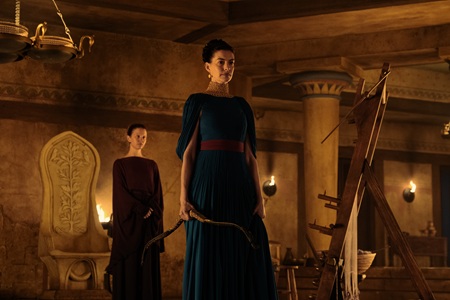
This woman is, of course, the powerful witch Circe, and Morton roars with a feminist caterwaul of resilience, cunning, and, most surprising of all, empathy that hit me like an emotional tidal wave of unexpected savagery. The actor blazes through her scenes with a singular, physically lithe tenacity that’s breathtaking. Her face-off with Damon is like its own subtly internalized and beautifully minimalistic mini-movie hidden inside an otherwise muscular larger-than-life epic. Even if Circe only appears for a brief, maybe ten-minute sequence, the impression this character leaves in her wake cannot be minimized. No matter how short, this is one of the best performances I’ll see this year.
From that moment on, Nolan takes his foot off the brakes. There is no slowing down. The journey to Hades to be reunited with Sinon. An encounter with The Sirens. The choice between Charybdis and Scylla. The decision as to whether or not to slaughter and eat one of the Cattle of Helios. The catastrophic journey to Ogygia and Odysseus’s first encounter with Calypso. Intermixed inside all of this is Telemachus’ dangerous journey back to Ithaca as well as Odysseus finally recounting what happened inside the Trojan Horse.
It’s all marvelous, and Nolan pulls out all the stops. Practical locations and effects intermix comfortably with digital creations (the Cyclops, encountered early on, is pure Ray Harryhausen-inspired magic reminiscent of the giant Talos from Jason and the Argonauts). Ludwig Göransson (Sinners) delivers a thunderous score of pugnacious majesty. Costume designer Ellen Mirojnick (Black Bag), editor Jennifer Lame (Tenet), and the entire sound effects design team deliver Oscar-worthy results. As for director of photography Hoyte van Hoytema (Dunkirk), it’s hard to imagine I’ll see a better shot motion picture in all of 2026 than this one. This is the Oscar winner’s finest hour.
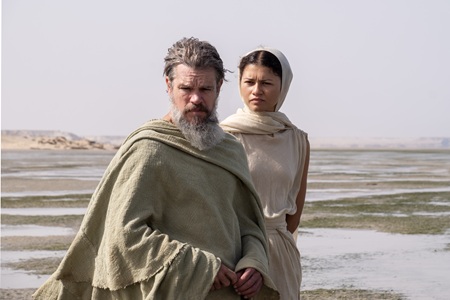
The last half hour is a maelstrom of violence and resurrection. It is also an aria of introspection and regret. Nolan turns Homer’s work into a modern parable. The fall of Troy is the death of human understanding between nations. Decency no longer has a place at the table. Odysseus blames himself for all of this and more; his haunted recollections of what transpired after he lowered himself out of that hollow horse manifesting eternal poltergeists who will live with him forever.
Yet Nolan still finds hope in unimaginable carnage. His retelling of The Odyssey sees a new dawn breaking on the horizon, and it is up to a fresh generation free of the shackles of their forefather’s mistakes, errors, and misconceptions to lead the way. That’s an assessment appropriate for the here and now, let alone one Homer would have likely found apt approximately 2,800 years ago, give or take.
– Review reprinted courtesy of the SGN in Seattle
Film Rating: 3½ (out of 4)