

Visually Dynamic Dog Stars Puts a Dystopian Primacy on Character
Noah Wyle was on Turner Classic Movies program “Two for One!” earlier this year in May presenting a double feature of Fat City and Inside Moves. While talking about 1970s filmmaking with host Ben Mankiewicz, Wyle spoke of something he dubbed “primacy of character.” It’s a phrase I immediately fell in love with.
The idea was that, during this period of renegade filmmaking, directors weren’t as concerned with plot mechanics as they were with character dynamics. These pictures (mostly) eschewed the old-fashioned matinee good looks of the movie stars of the Golden Age. Instead, they turned to the likes of Stacey Keach, Jeff Bridges, Susan Tyrrell, John Savage, David Morse, and Diana Scarwid to headline their dramas. They placed an emphasis on creating a time, place, and a lived-in aesthetic that matched the intensity of the hardscrabble, genuinely complex performances of their stars
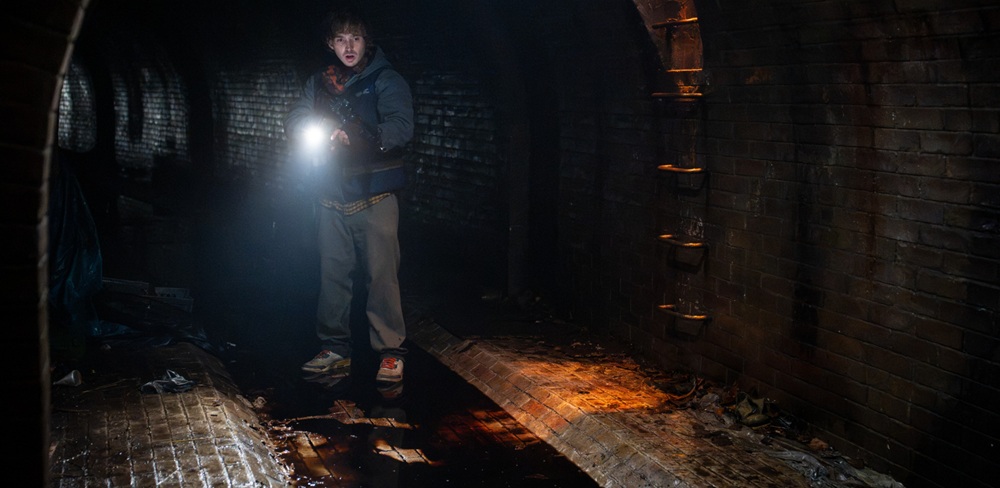
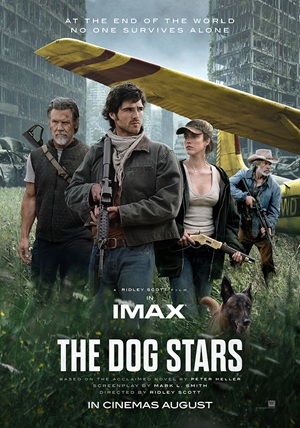
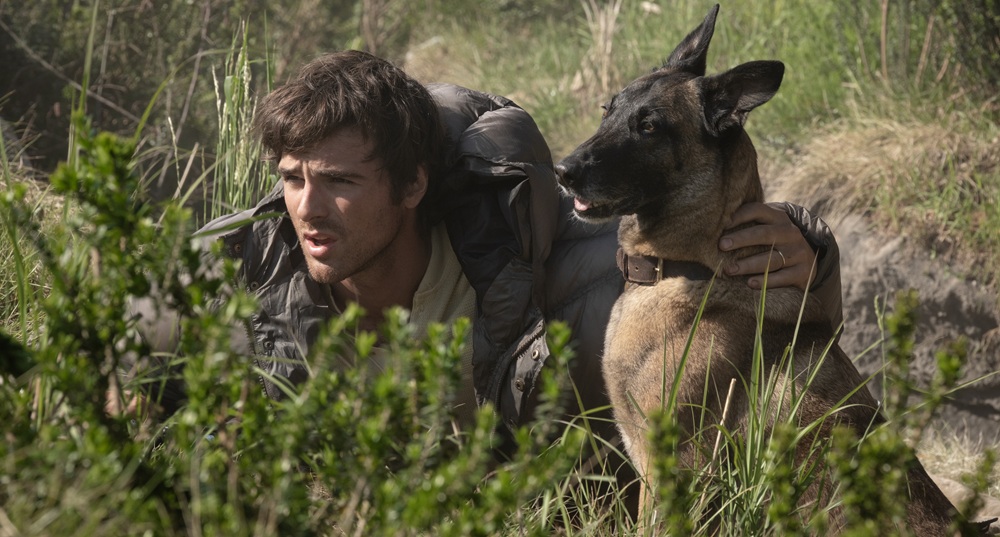
I bring this up because Wyle and Mankiewicz’s discussion came back to me after I exited a press screening of Ridley Scott’s The Dog Stars, an ambitious dystopian dramatic thriller based on the best-selling novel by author Peter Heller. This is very much a motion picture composed by the director of The Duellists, Alien, and Blade Runner. It is an ethereal netherworld where Scott creates a hard, believably tactile world on the brink of ruination, populated by a handful of grizzled, weary survivors who wear their pain, suffering, and resilience openly on their faces for everyone they encounter to see.
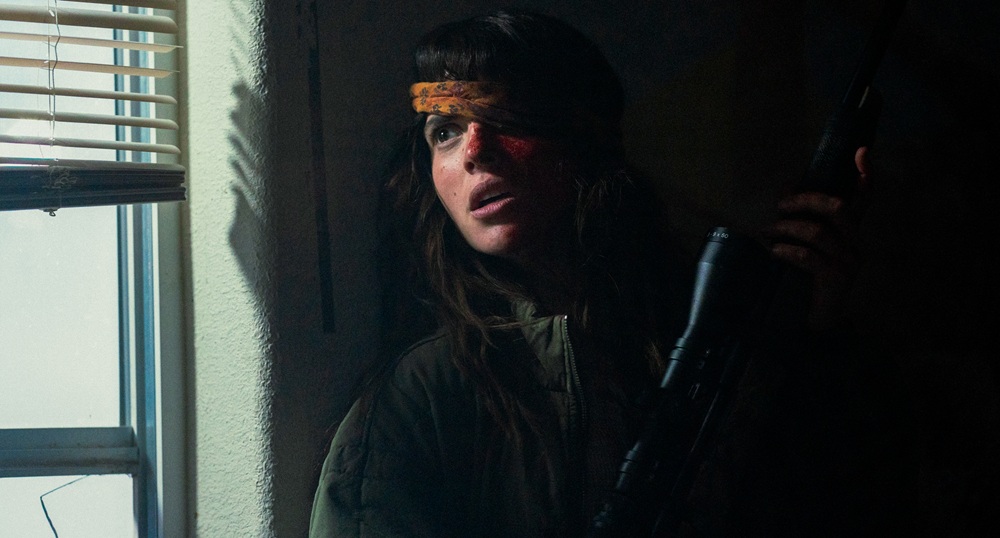
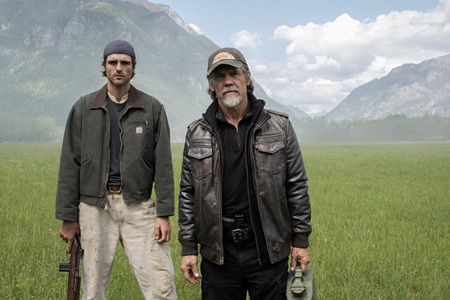
It’s not quite the same as those aforementioned classics. After Alien, the stars got bigger (and far better looking) as the films Scott made got increasingly bigger. But even with the traditionally gorgeous Hollywood good looks of Jacob Elordi and Margaret Qualley, Scott and his team keep the duo just dingy and dirty enough that they could almost pass as modern-day doubles of John Heard or Melinda Dillon. Additionally, by placing them alongside the hardened lines of the suitably weathered Josh Brolin, Guy Pearce, and Allison Janney, they fit into this beauteously broken outdoor wasteland the director goes above and beyond to create seamlessly.
But, and like those early projects, Scott isn’t as concerned with plot or cohesive storytelling as he arguably should be. Instead, he’s fascinated by his film’s characters. The way the light reflects off of their faces. How darkness both conceals and augments the wounds and scars of a devastated world upon their biological forms. Scott keeps dialogue to a minimum, relying instead upon the carefully choreographed physicality of his actors, the intimately unsettling sound design, the haunting score from composer Harry Gregson-Williams (Gladiator II), and the majestic images cinematographer Erik Messerschmidt (Mank) spectacularly composes to speak for themselves.
This leads to the possibility that all of this could be much ado about nothing. The film introduces protagonists Hig (Elordi) and Bangley (Brolin) at a certain point in their lives as two of the few survivors of a devastating apocalypse, and even though their situation does fundamentally shift by the time their adventure concludes (including the death a four-legged friend that many will undeniably find triggering), not all that much about the world they live in or what is possibly happening to it changes at any point. If one is looking for a grand statement about how humanity is doomed if it doesn’t wake up and start tackling serious issues like climate change, food insecurity, political ineptitude, and overpopulation with vim and vigor, sorry to say they will not find it here.
The thing is, this isn’t a bad thing. This is a motion picture that just “is,” and not too much more than that. The world the characters we meet as we watch events unfold is set. It does not become something new or different as things go along. The people we want to care about are striving to hold on to values and relationships that help them maintain some semblance of normalcy against a backdrop of madness, loneliness, and, in many cases, all but certain death. It’s hard not to relate to that. Or, at the very least, I hope it isn’t.
That does not stop Scott’s opus from coming across like a genre grab-bag. Its Western aspects feel pulled directly from the likes of The Outlaw Josey Wales or The Ballad of Cable Hogue. Its apocalyptic sequences are like a surreal combination of Mad Max: Beyond Thunderdome, Soylent Green, and I Am Legend. Other sections bring to mind esoteric mind-benders like Zardoz, The Shining, and Logan’s Run. Safe to say, I’m not going to try and say with a straight face that any of these aspects fit together comfortably.
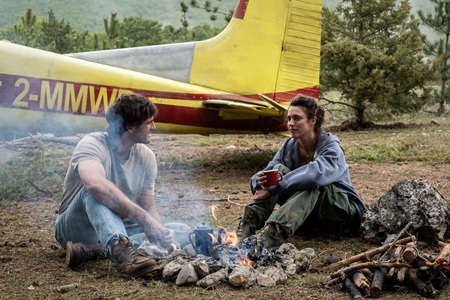
All of this brings me back to Wyle’s “primacy of character.” While Scott still directs exhilarating action sequences better than almost anyone, even those superb set pieces (one at a secluded mountain farm where audiences first meet Pearce and Qualley, a second later on involving Janney at a refurbished backwoods airport that looks as if it’s been pulled straight out of a 1950s art deco painting) take a back seat to how each member of the ensemble slips effortlessly into their respective roles. This is a snapshot of each of their lives and how they deal with the apocalyptic reality they’ve been presented with. Anything more than that is up to the viewer to determine on their own.
For all its technical virtuosity and cinematic largess, Scott’s latest is a throwback to the 1970s. The Dog Stars may not have a lot to say, but there’s still plenty it is working overtime to make its audience feel. These lives have value. Whether the survivors push forward into a brave new world with newfound fortitude isn’t important. That they’re continuing to live in it come what may is.
Film Rating: 3 (out of 4)